

Grocery Inflation Index
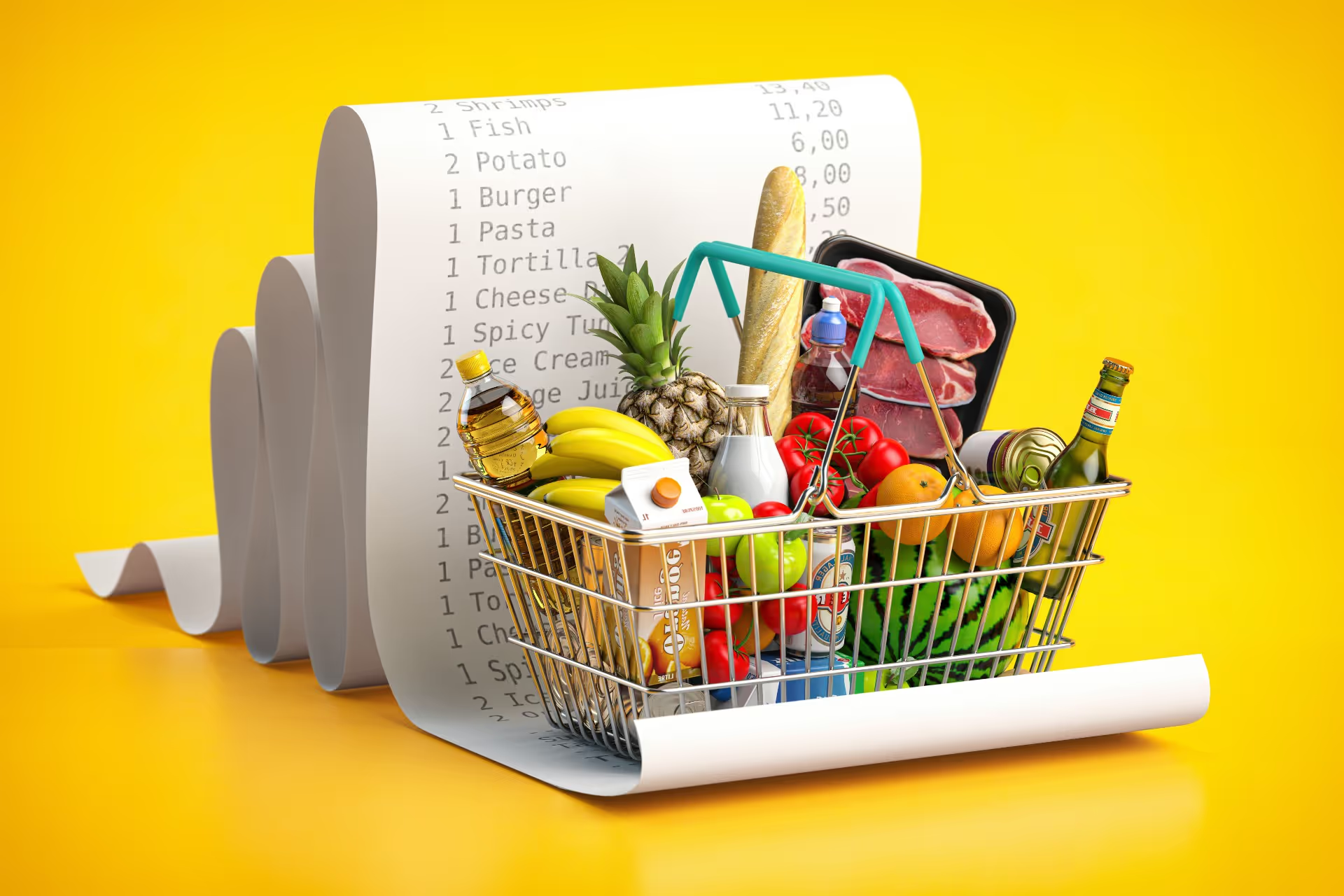


The Impact Analytics Grocery Inflation Index tracks weekly U.S. price movements of key grocery items. We capture vast amounts of publicly available information from major grocers across multiple geographies, and because we publish more frequently than the Bureau of Labor Statistics, we generate actionable insights for our clients based on the most granular, up-to-date data available.
In 2024, grocery spending accounted for approximately $1.5 trillion in the U.S. retail market, underscoring its significance as a high-frequency, essential category. Given its inelastic nature, pricing changes in groceries can substantially influence discretionary spending patterns. By closely monitoring grocery inflation, we can swiftly identify trends, assess impacts, and provide our clients with timely, accurate insights, setting us apart from other retail planning providers.
To facilitate this, we’ve developed a representative basket comprising the most consumed grocery products in the U.S., spanning categories such as fruits and vegetables, cereals and baked goods, dairy, meat, seafood and poultry, frozen foods, deli items, and beverages. These items are selected based on factors like consumer availability, accessibility, and popularity.
Each category within the basket is weighted according to its average U.S. consumption. For instance, if consumers allocate 20% of their grocery budget to dairy, then dairy products constitute 20% of our basket. Further, we’ve classified these products into macro-nutrient food groups (proteins, carbohydrates, and fats), staple versus discretionary foods, healthy versus indulgent options, and plant-based versus animal-based items. This nuanced categorization enables us to uncover underlying price trends across various consumer segments and nutritional profiles.
We then compare their prices weekly to discern price inflation and its effects.
Food Prices Increased Significantly Over the Past 12 Months
Inflation in the overall food-at-home segment (including grocery store and supermarket food purchases) rose 2.2 percent over the last 12 months. The steepest increase was in meats, poultry, fish, and eggs (7.4 percent). Offsetting that over the same period, Fruits and vegetables prices declined slightly (1.4 percent). Dairy and related products rose to (1.9 percent). Other significant food categories displayed varying increases— Cereals and bakery products increased by 1.7 percent, Non Alcoholic beverages and beverage materials increased by 1.9 percent whereas, Other food at home increased by 1.3 percent. Overall, meats, poultry, fish, and eggs are the only category with the steepest increase among the food-at-home segment.
Pricing Insights from Recent Weeks: Marginal Price Increases
From February to March, prices rose only slightly: 0.5 percent. The steepest price increase (1.30 percent) was observed in the Meats, poultry, fish, and eggs category & (1.00 percent) in Dairy and related products. Other food at home prices went up (0.50 percent) and the prices of Nonalcoholic beverages and beverage materials rose by (0.6 percent). The steepest decline in the prices was observed in fruits and vegetables (0.5 percent) and cereals and bakery products (0.1 percent).
Discretionary, Protein-Rich, and Non-healthy Product Prices Continue Outpacing Other Segments
Month-over-month (MoM) prices for discretionary food products increased by 0.74 percent while staple products increased by 0.04 percent. Prices for fat-rich, protein-rich and carbohydrates-rich products increased by 0.63 percent, 1.05 percent and 0.02 percent, respectively. Price increases for healthy products (3.69 percent MoM) slightly outpaced that of non-healthy products (3.03 percent). Prices for plant-based products decreased by 0.2 percent while non-plant-based product prices also rose by 0.63 percent.

Retail Industry Resources



It's Time to Think Differently
Let Impact Analytics hone your instincts with data-driven clarity. Discover how Agentic AI gives leaders more time to focus on strategy and creativity with streamlined workflows and agent support that drives enterprise value.