Contact Us
Contact Us
Apparel, Accessories, & Footwear

Fashion Retail, Run as One Plan with Autonomous Orchestration

Only With Impact Analytics
Most of a fashion season's inventory is committed months before the first customer sees it, and no buy is ever exactly right. What happens next determines the outcome: where inventory goes, which sizes each store receives, which products get replenished, and when promotions and markdowns begin.

Only with Impact Analytics do AI Agents orchestrate demand forecasting, assortment planning, inventory, sizing, pricing, and markdown decisions against the same live view of demand. When a trend shifts, every decision that follows can move with it.
Contact Us
Contact Us
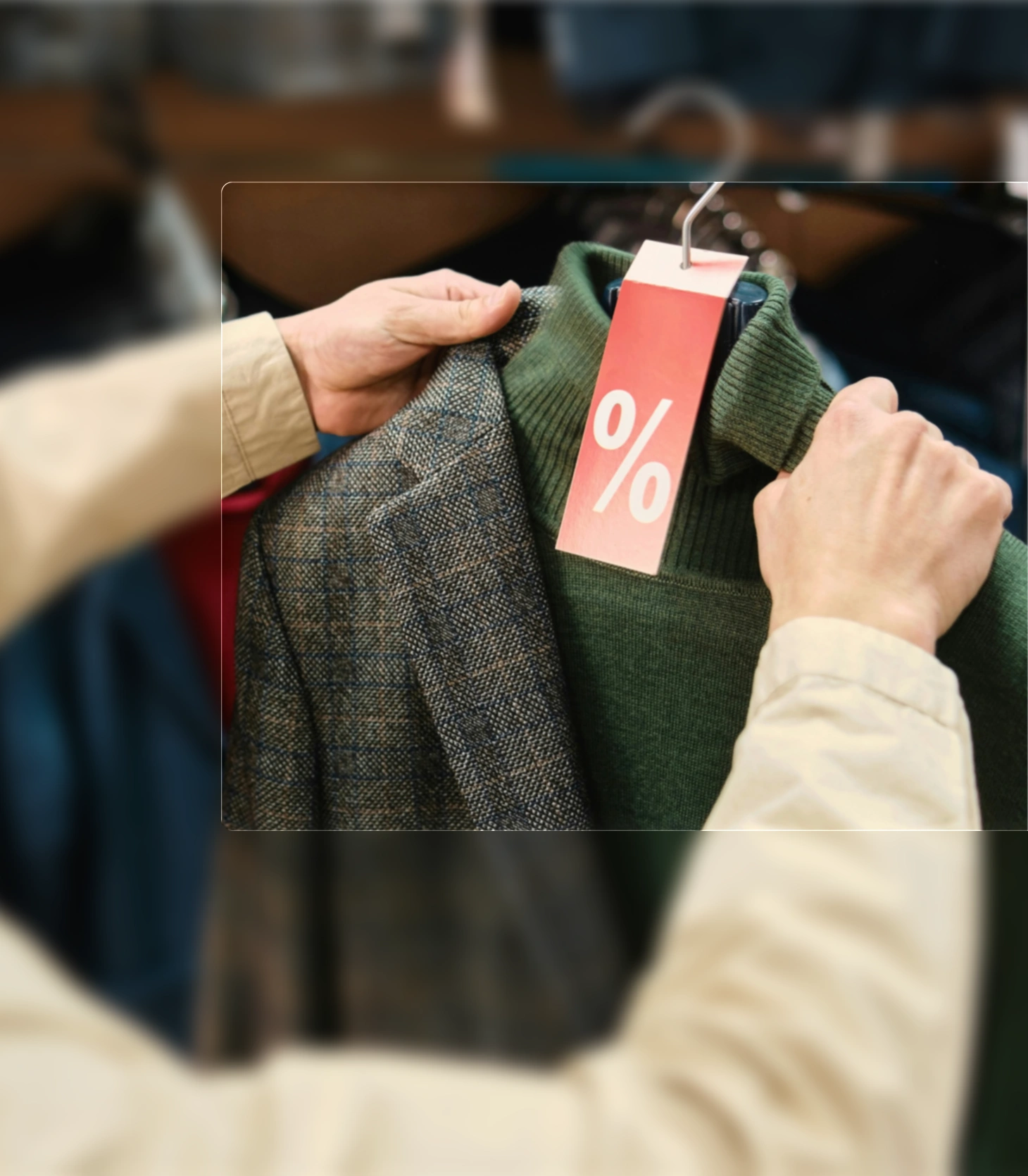
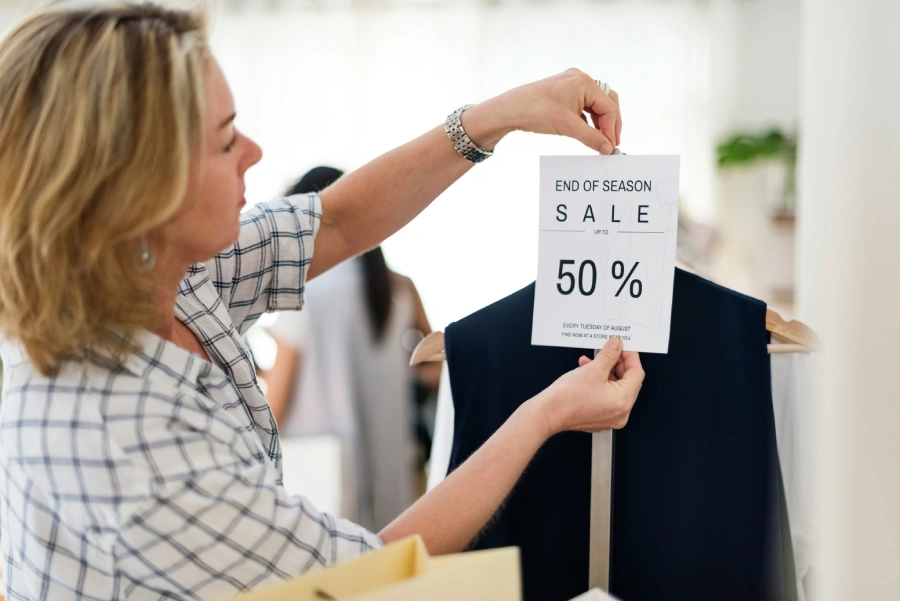
Person holding a green turtleneck sweater with a plaid blazer on a hanger that has a red discount tag.
Trusted by Market-Leading Global Brands

01

02

03

04

Industry Challenges

Connected Planning for Fashion Retail

Fashion retail operates against a fixed seasonal clock. Styles have weeks to prove themselves, inventory was often committed months earlier, and replenishment windows close quickly. When forecasting, assortment, allocation, sizing, pricing, and markdown decisions operate independently, small planning errors compound into stockouts, excess inventory, and lost margin.

Unpredictable Fashion Demand

Trends can turn within weeks, making historical sales alone a weak predictor of what comes next. Fashion demand forecasting must account for recent selling patterns, product attributes, newness, seasonality, and emerging demand signals to identify winners and risks earlier.

Disconnected Merchandise Planning

Financial plans, assortments, item plans, and inventory decisions often move on different planning cycles. When demand changes, disconnected systems leave teams reconciling yesterday's assumptions instead of responding to what is selling now.

Inventory in the Wrong Stores

A product can be overstocked across the chain while simultaneously selling out in the locations where demand is strongest. Fashion inventory optimization requires allocation and replenishment decisions that continuously respond to SKU- and store-level demand.

Size Curves Built on Averages

Size demand varies by product, location, and customer. Chain-wide averages can sell through core sizes too quickly while leaving broken size runs and excess inventory that eventually require markdowns.

Trusted by Fashion Retail Leaders

In our clients’ own words

The platform’s ability to deliver rapid value through dynamic module interaction and sophisticated AI forecasting will future-proof our business, ensuring we remain at the cutting edge of retail innovation.
“Our planners immediately recognized that Impact Analytics understood the realities of retail planning at scale. The opportunity to move from spreadsheet-driven, line-by-line planning to an exceptions-management model is a significant step forward.”
“This partnership allows us to eliminate repetitive, low-value tasks so our merchandisers can focus on understanding what is truly happening in our brand and make quicker, higher-quality decisions to get the right products in the right places for our customers.”
Solutions

AI for Fashion Retail, Orchestrated Across the Full Merchandise Lifecycle

Demand forecasting, merchandise planning, assortment, inventory, sizing, pricing, promotions, and markdowns are not separate decisions. Impact Analytics connects them through autonomous orchestration, so a change in demand reaches every decision it affects without teams rebuilding the plan by hand.
Our Solutions
Our Solutions
Our Solutions
DemandSmart
ItemSmart

Demand Forecasting & Merchandise Planning

Sense demand down to the SKU, store, and week, including new products with limited history. Keep financial plans, item plans, and forward demand aligned as trends change throughout the season.
AssortSmart
SizeSmart

Assortment Planning & Size Optimization

Build localized assortments around what each store group actually sells, then optimize size curves by style and location so the right products and sizes reach the customers most likely to buy them.
PriceSmart
PromoSmart

Pricing, Promotions & Markdown Optimization

Optimize everyday prices, promotional offers, and markdown timing against demand, inventory, margin, and weeks remaining in the season. Every pricing decision reads the same inventory position and sell-through signals as the rest of the plan.
AttributeSmart

Product Attribution & Fashion Intelligence

Automatically identify attributes such as color, fabric, silhouette, fit, and style from product images and descriptions. Give forecasting, assortment planning, site search, and pricing the consistent product intelligence each decision depends on.

From First Forecast to Final Markdown, One Fashion Retail Plan

The fashion season changes constantly. Autonomous orchestration keeps the decisions around it connected.
Sense Demand
DemandSmart detects shifts in demand by product, store, and week, giving every downstream decision the same current view of what customers are buying.
Build the Range
AssortSmart and SizeSmart translate demand into localized assortments, option counts, depth, and size curves suited to each store and customer profile.
Position Inventory
InventorySmart keeps stock aligned with where demand is developing, surfacing stockout and excess inventory risk while there is still time to act.
Optimize Price
PriceSmart and PromoSmart coordinate pricing and promotions with demand and inventory, protecting margin without losing sight of sell-through.
Clear the Season
MarkSmart adjusts markdown timing and depth against remaining inventory and weeks left to sell, helping clear seasonal products without discounting deeper than demand requires.

Fashion Retail AI Built for Every Merchandise Decision

Impact Analytics brings AI-native fashion retail planning software together on one connected platform, giving merchandising, planning, inventory, and pricing teams a shared view of demand and the ability to act on it across the season.
Demand Planning
Forecast fashion demand by SKU, store, channel, and week.
Merchandise & Item Planning
Keep financial targets, buys, and item plans aligned as demand changes.
Assortment Planning
Build localized product ranges around store-level demand..
Size Optimization
Optimize size curves by product, location, and customer demand.
Inventory Optimization
Allocate and replenish inventory where it has the greatest opportunity to sell.
Pricing & Promotion Optimization
Set prices and offers against demand, inventory, elasticity, and margin goals.
Markdown Optimization
Time and size markdowns around sell-through, remaining inventory, and seasonal exit targets.
Product Attribution
Create consistent fashion product attributes from images, descriptions, and supplier data.

Win the Season Before the Season Ends

See how AI Agents orchestrate fashion retail decisions from the first forecast and assortment plan through allocation, pricing, and the final markdown, helping teams capture demand while it is there and protect margin before the season moves on.
Only With Impact Analytics
Rethink how your business makes decisions. Replace disconnected AI with agentic intelligence that moves every function toward the same business outcome. Discover how Impact Analytics helps you lead the shift to a fully orchestrated, autonomous enterprise.
Contact Us
Contact Us
Featured Resources

Retail Industry Resources

Stay up-to-date on industry trends and AI insights with resources from Impact Analytics experts.
View Resources
View Resources
View Resources

Frequently Asked Questions

What is AI for fashion retail?

AI for fashion retail uses artificial intelligence to improve decisions across demand forecasting, merchandise planning, assortment, sizing, inventory, pricing, promotions, and markdowns. Impact Analytics connects these decisions through autonomous orchestration so each function works from the same view of demand.

How does AI improve fashion demand forecasting?

AI-powered fashion demand forecasting combines historical sales with recent demand signals, product attributes, seasonality, pricing, promotions, and other causal factors. This helps retailers identify changes in demand earlier and forecast at granular levels such as SKU, store, channel, and week.

How can AI improve fashion assortment planning?

AI assortment planning analyzes demand and product performance across stores and channels to determine which products each store group should carry and how much depth to place behind them. This creates localized assortments rather than applying one range across every location.

How does AI help fashion retailers optimize size curves?

AI size optimization analyzes how individual sizes sell by style and location rather than relying on chain-wide averages. Size curves can then reflect local demand, helping retailers reduce stockouts in high-demand sizes and excess inventory in sizes selling more slowly.

How does AI reduce markdowns and excess inventory in fashion retail?

AI helps retailers identify inventory risk earlier, position stock where demand is strongest, and adjust pricing and markdown timing based on sell-through and remaining weeks in the season. This gives teams more opportunities to correct inventory imbalances before deeper markdowns become necessary.

What is autonomous orchestration in fashion retail?

Autonomous orchestration connects AI Agents across forecasting, merchandising, assortment, inventory, sizing, pricing, promotions, and markdowns. When demand changes, the agents coordinate the decisions affected by that change against one connected plan, while human teams retain control over the exceptions and approvals that require their judgment.

What fashion retail planning solutions does Impact Analytics provide?

Impact Analytics provides AI-native solutions for demand forecasting, merchandise and item planning, assortment planning, size optimization, inventory optimization, pricing, promotions, markdowns, and product attribution. These solutions work together through autonomous orchestration rather than operating as isolated planning tools.