.avif)






Every October, Amazon gives the rest of the retail industry an early look at its holiday hand. Prime Big Deal Days, the fall Prime event Amazon has run since 2022, returned for its fifth year on October 6 and 7, and pricing teams across the industry watched those 48 hours closely, because what Amazon discounts in early October tends to shape what shoppers expect on Black Friday, which falls on November 27 this year. The signal this time came from a choice running against the grain of June’s expansive Prime Day, as Amazon put fewer products on promotion and kept each discount just as deep.
To understand what that choice means for retailers still shaping their holiday calendars, Impact Analytics tracked the top 1,000 products across 13 retail categories through the days before the event and the event itself.
Amazon Entered the Event Lean and Saved Its Sharpest Cuts for the Sale
The habit of entering lean and striking hard held firm in October. Average depth across the tracked assortment sat at 13% in the pre-period and rose to 30% once the event opened, an increase of 17 points. Keeping early discounting this tight allowed the event price to register as a genuine break from the week before.
The increase in depth was far from uniform, and the thirteen categories sort into three clear groups:
- The largest depth increases came from replenishment essentials. Beauty & Personal Care led at 19 points, with Grocery, Pet Supplies, and Health & Household close behind at 17 to 18.
- Moderate increases ran through the middle of the assortment. Baby Products, Electronics, Clothing, Sports & Outdoors, and Tools & Home Improvement rose 14 to 16 points, with Clothing finishing at 36%, the deepest discount of the event.
- The smallest increases came largely from cost-exposed categories. Cell Phones, Home & Kitchen, and Patio rose 13 points, and Appliances rose just 11 from a pre-period depth of 21%, already discounting heavily before the sale began.
The largest increases sit at the bottom of the chart because those categories started from the lowest pre-period depths and still finished below the seasonal categories.
Amazon's sharpest event-day jumps went where shoppers come back most often, because a deep price on a repeat purchase grows the basket during the sale and keeps paying back after it closes.
Where Each Category Landed on Reach and Depth
.png)
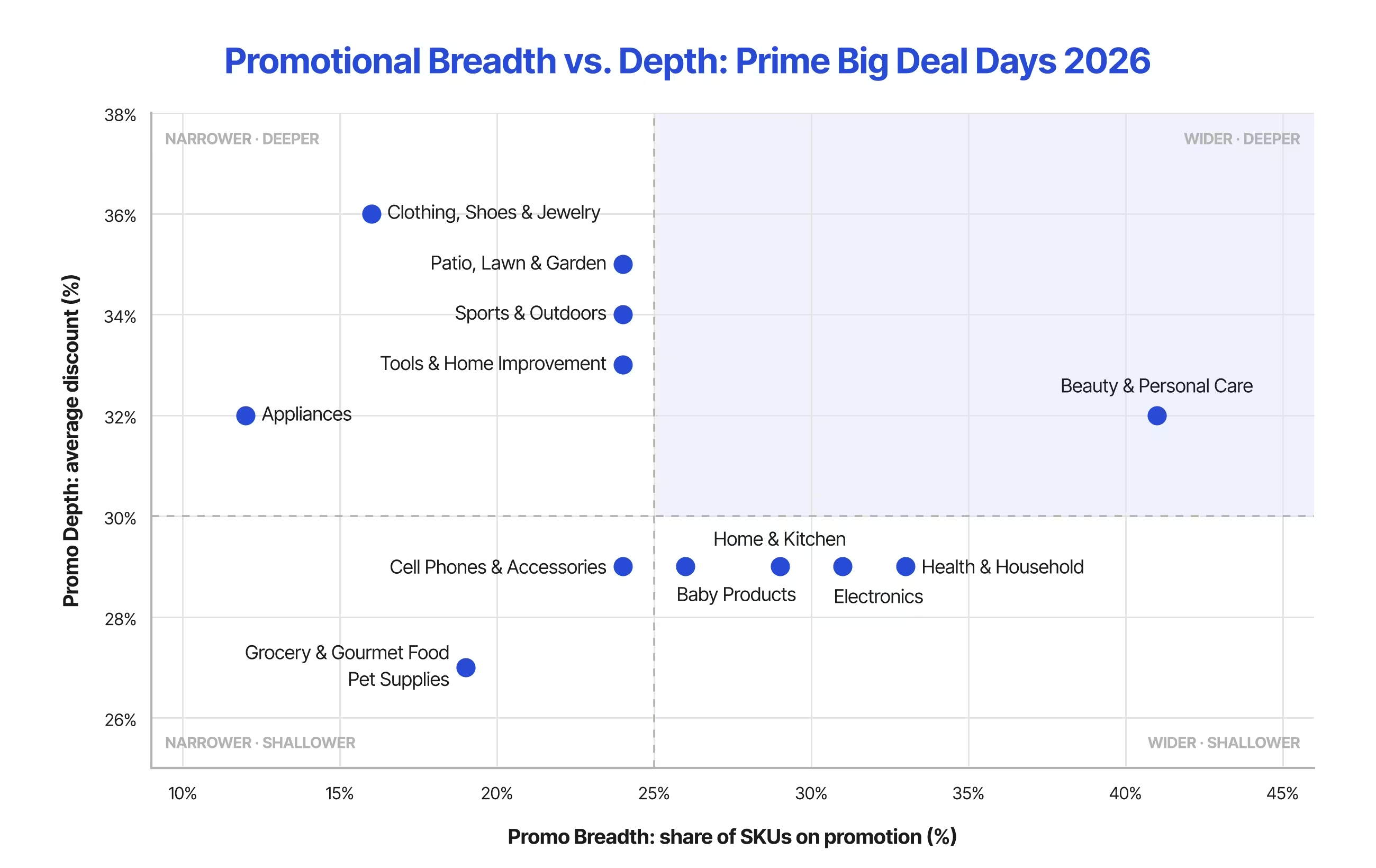
The dashed lines mark the event averages of 25% breadth and 30% depth, dividing the thirteen categories into four distinct plays:
- Narrower and deeper, where Amazon concentrated its markdowns: Clothing, Shoes & Jewelry led at 36% depth on just 16% breadth, while Patio, Sports, and Tools clustered at 24% coverage with discounts of 33% to 35%. Appliances paired the narrowest coverage in the set, at 12%, with a 32% discount.
- Wider and deeper, where Amazon bet on reach: Beauty & Personal Care stood alone here, promoting 41% of its products at 32% depth, the only category where Amazon pushed both levers above average.
- Wider and shallower, where Amazon bought visibility: Baby Products, Home & Kitchen, Electronics, and Health & Household kept 26% to 33% of their products on promotion, all at 29% depth, staying broadly visible without spending extra margin.
- Narrower and shallower, where Amazon showed restraint: Cell Phones & Accessories, Grocery & Gourmet Food, and Pet Supplies sat below average on both measures. Grocery and Pet landed here despite some of the event's largest depth increases, because they started from the lowest pre-period depths.
Amazon Tightened Coverage and Held Average Depth Steady Against June
Set against June, the headline shift comes down to a single move. Promotional breadth fell from 30% to 25% of the tracked assortment, while average depth held at 30% across both events.
Category-level depth stayed close to June as well, moving by three points or less everywhere except Appliances, where depth rose seven points even as its coverage narrowed.
Amazon appears to treat depth as a fixed anchor, the level of discount Prime members have learned to expect from a Prime event, and breadth as the dial it turns to suit the conditions of each moment.
Shoppers judge a Prime event by how deep its discounts go, and that leaves Amazon free to decide, far more quietly, how many products carry them.
Why would Amazon pull coverage back in the event sitting closest to the holiday quarter?
Three forces likely explain it.
- Event length is the first, since a 48-hour event can feel full with a tighter promoted set and needs fewer deals to stay fresh from start to finish.
- Cost exposure is the second, and the data makes the case plainly: the steepest coverage cuts landed in cost-exposed categories led by phones, tools, and patio, with electronics and home close behind. Where input costs run high, each additional promoted SKU carries real margin risk, so narrowing coverage protects profit without forcing a visible retreat on discount depth.
- The calendar is the third force. October sits at the doorstep of the holiday season, and widening coverage now would spend promotional capacity Amazon will almost certainly want later in the quarter, when the shoppers it courted in October return with a fuller gift list and higher intent.
How Each Category Traded Coverage Against Depth Since June’s Prime Day Sale
.avif)
Set side by side, the two measures tell a clear story. Coverage did most of the moving, with eleven of the thirteen categories promoting a smaller share of their range than in June, while depth stayed within three points of its summer level everywhere except Appliances. Read together, the categories fall into three distinct postures:
- Fewer products, slightly shallower cuts: Cell Phones & Accessories took the steepest coverage cut of any category at 12 points while trimming depth by two, and Electronics and Home & Kitchen followed the same path. In these cost-exposed categories, Amazon protected margin from both directions at once.
- Fewer products, deeper cuts: Appliances made the sharpest shift, narrowing coverage by five points while deepening discounts by seven. That turned a category Amazon kept restrained in June into a narrow, deep play worth watching through the holiday season. Tools & Home Improvement, Patio, Lawn & Garden, and Sports & Outdoors also narrowed coverage and deepened discounts, with depth up only 1 to 2 points.
- Coverage held steady: Only Clothing, Shoes & Jewelry and Baby Products avoided a coverage cut. Clothing deepened three points on unchanged reach to run the event's deepest discounts, while everyday essentials such as Grocery, Pet Supplies, and Health & Household eased by two points or less.
Beauty & Personal Care gave up four points of coverage yet remains Amazon's widest promotional category at 41%, still its clearest bet on reach.
How Amazon’s Prime Playbook Has Evolved Since 2024
If Amazon has reshaped its promotional strategy so often, why has the average discount barely moved?
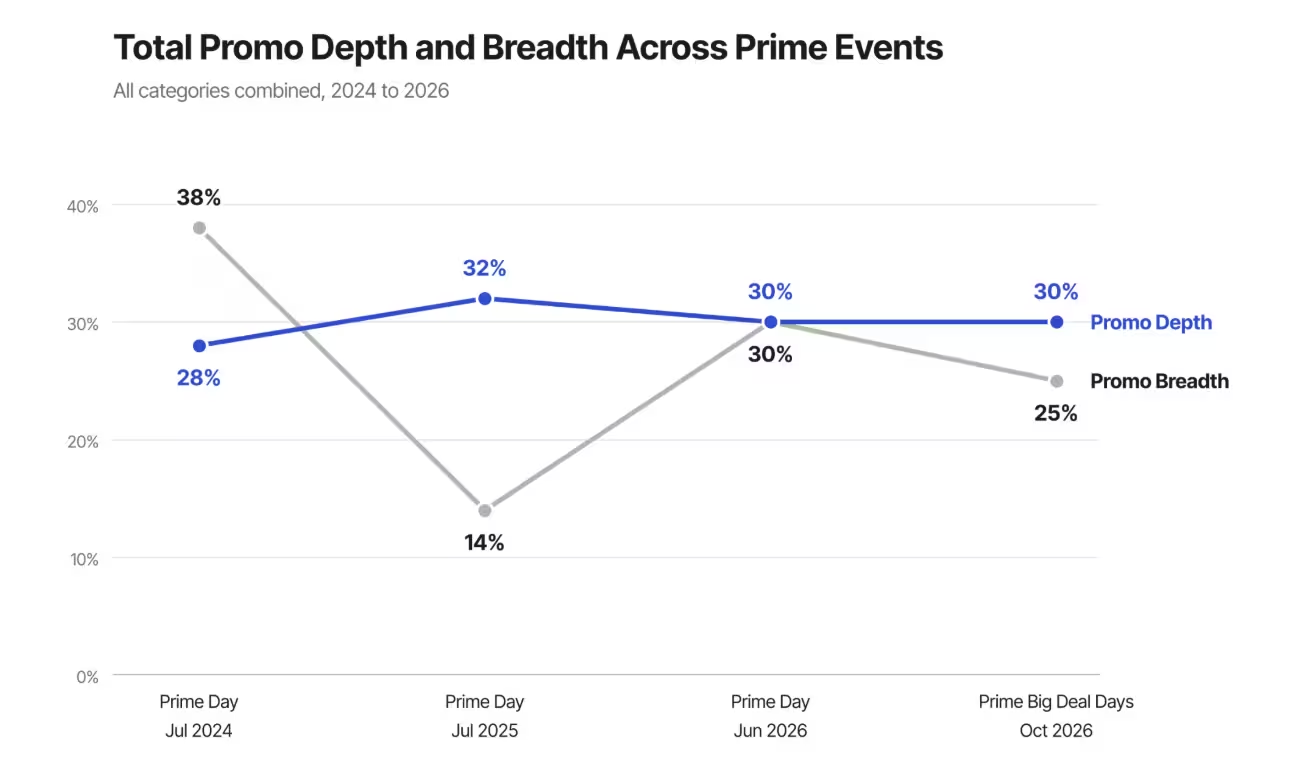
Across four Prime events, depth has stayed between 28% and 32%, while breadth has swung from 38% to as low as 14% and back to 25%. Shoppers have learned to expect roughly 30% off during a Prime event, so Amazon keeps that promise steady and flexes how many products carry it, giving retailers a clear rule of thumb: meet the depth expectation and find flexibility in breadth.
If the total barely moves, where has Amazon been spending its depth?
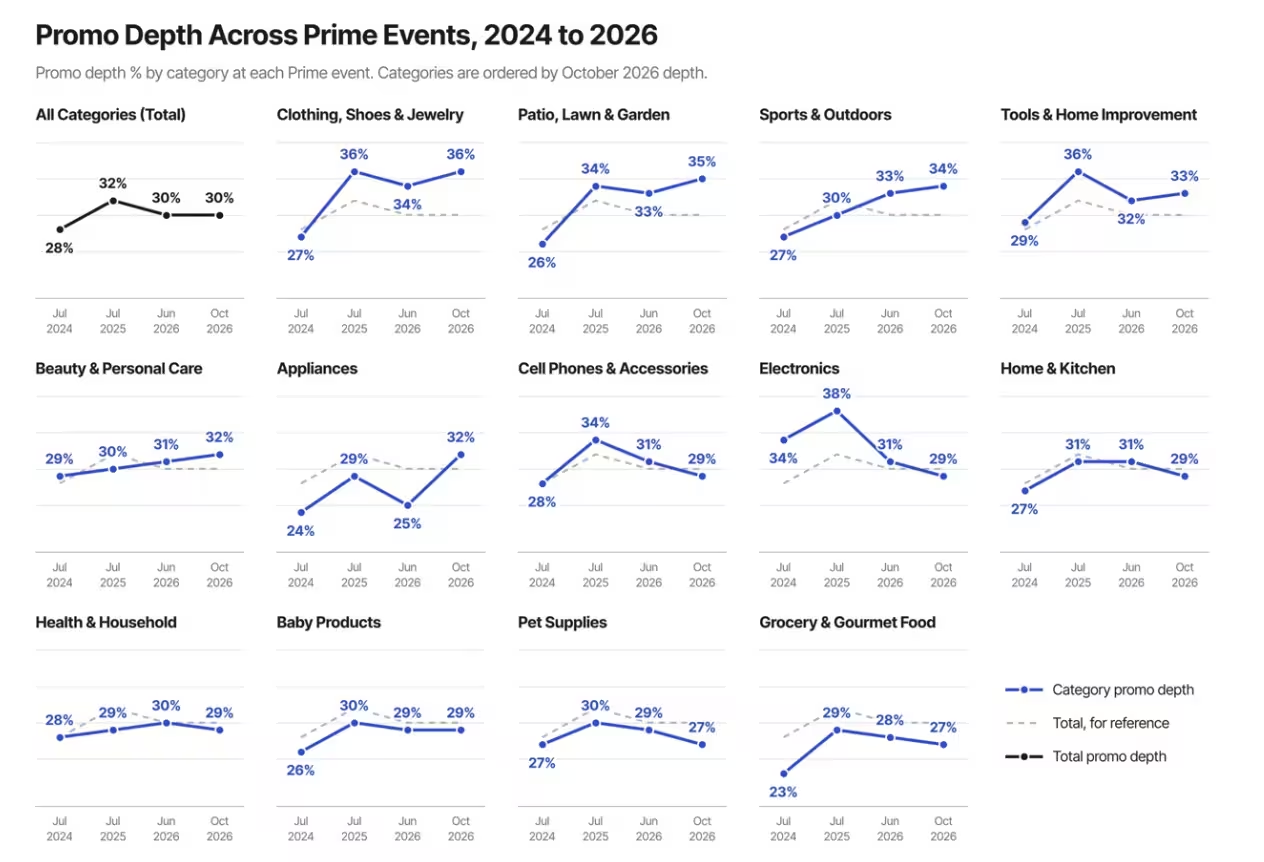
- Tech is cooling: Electronics fell from 38% in July 2025, the deepest of any category, to 29% today. Cell Phones & Accessories has slid since 2025, consistent with the cost pressure both categories also show in their coverage cuts.
- Seasonal category is heating up: Clothing, Shoes & Jewelry leads at 36%, Sports & Outdoors has deepened at every event since 2024, and Patio, Lawn & Garden hit 35%, its highest across the four events, as Amazon clears inventory with a limited selling window.
- Appliances and Beauty are the ones to watch: Appliances reached 32%, its deepest across the four events, while Beauty has climbed one point at every event, steadily building its role as Amazon’s reach category.
The headline discount looks unchanged, yet margin has quietly moved from cost-exposed tech to categories where inventory risk or repeat purchase pays it back.
Holiday Planning Moves Drawn From Amazon’s October Playbook
What should a retailer finalizing its holiday promotion calendar take from two Prime events in four months?
With the holiday season ahead, several of Amazon's choices translate directly into decisions retail leaders can still make while promotion calendars are being finalized.
Hold depth steady and let coverage do the flexing. Average depth has held between 28% and 32% across every Prime event tracked since 2024, and shoppers calibrate their expectations to that level. Retailers adjusting for cost pressure will find more room in how many products they promote than in how far they cut each one, since a shallower discount on a familiar item registers with shoppers far faster than a shorter promoted list.
- Keep the run-up quiet: Amazon entered October at a 13% pre-period depth, and the 17-point increase that followed made the event price feel decisive. Early holiday discounting has its uses, yet every point given away in the run-up to the holiday peak blunts the contrast shoppers respond to once the season's biggest events arrive.
- Concentrate the deepest cuts where repeat purchase pays them back: Beauty, grocery, pet, and household essentials saw the largest depth increases over the pre-period in October. Depth in these categories builds baskets and brings shoppers back, which places it among the most defensible markdown spend of the season.
- Protect cost-exposed categories through coverage: Amazon narrowed promotion across phones, tools, electronics, and home while trimming depth slightly in the tech categories. Retailers carrying cost-exposed assortments can apply the same logic, keeping hero products sharply priced while limiting how far promotion extends across the rest of the range.
- Clear deliberately, and early: Appliances and the seasonal categories show the value of going narrow and deep on inventory at risk. Moving aged stock before the holiday peak frees up capacity, cash, and attention for the products shoppers will be searching for at the height of the season.
Amazon's two Prime events in 2026 have effectively drawn the boundaries of the holiday quarter. Depth near 30% is now the reference point shoppers carry into the holiday season, and the swing in coverage between June and October shows how much room for discipline exists inside that boundary. The strongest holiday plans will decide, category by category, where to widen coverage, where to go deep, and where to hold, and they will settle those calls early enough for the decisions to shape the season.
Take the Next Step
Every retailer heading into the holiday season is working through its own version of the trade-offs Amazon made this October. Impact Analytics Pricing War Room Services help pricing and merchandising teams navigate those choices with confidence, modeling breadth and depth scenarios against live demand and inventory so each holiday markdown earns its place.
Only with Impact Analytics does the category-level read of Amazon's promotions behind this analysis sit directly alongside your own demand, inventory, and margin data, turning competitive signals into holiday decisions your teams can act on immediately.