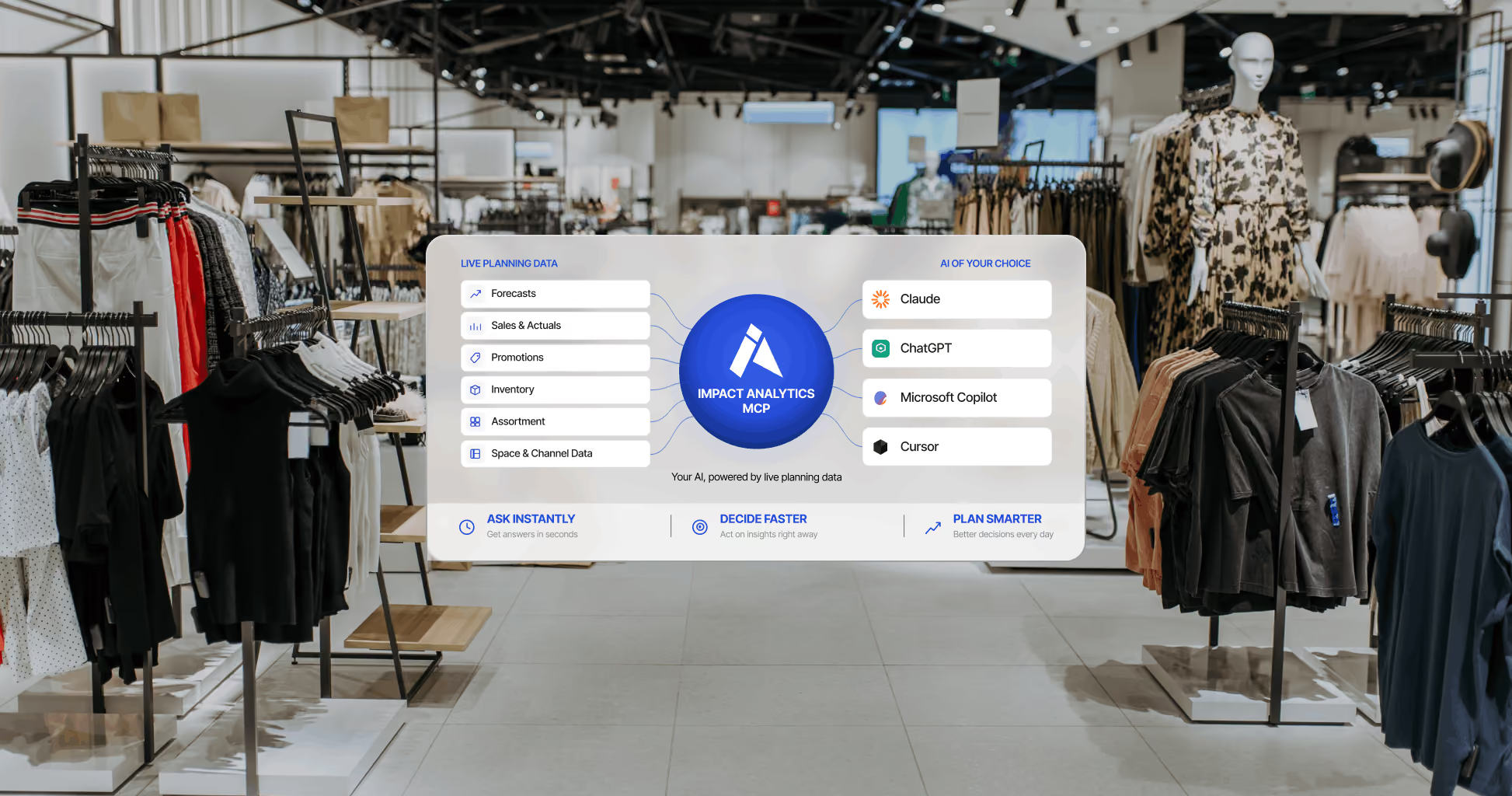






Retail planning teams have never had a shortage of data. What they have had a shortage of is time: time to get to it, make sense of it across systems. And turn it into a decision before the moment passes. Every planning cycle carries that cost quietly, in the report pulls, the analyst requests, and the hours spent reconciling numbers that should have been one conversation.
Impact Analytics MCP changes where that conversation happens. Connect your AI of choice: “Claude, ChatGPT, Microsoft Copilot, or Cursor”, directly into your live planning environment, and every question your team would have scheduled a report to answer becomes something they can ask and act on in the same breath.
Your AI, Powered by Live Planning Data
A planner working with Impact Analytics forecasting and assortment tools has data spread across forecasts, actuals, promotions, inventory positions, and planning hierarchies. That depth of context is what makes Impact Analytics output trustworthy, and it is also what makes them difficult to reach on demand when a question comes in before a Monday review or mid-cycle, when a category starts to move unexpectedly.
What Generic AI Does With Your Data
Generic AI tools work from whatever you paste into a prompt window, placing the entire burden of context on the user. You become the reconciliation layer between your planning system and your AI assistant, manually pulling what the machine needs before it can return anything useful.
This is precisely the limitation that Impact Analytics MCP was built to solve. The Model Context Protocol gives Claude, ChatGPT, Copilot, Cursor, or any MCP-compatible assistant a direct, secure line into your live planning environment—so when a planner asks why their forecast missed last week for the Northeast store tier, the answer is already there.
The Connection Is the Differentiator
Every response your AI returns through this platform connectivity is grounded in data that has already been cleaned, validated, and processed through Impact Analytics planning and optimization engine. The agent reasons on decision-ready intelligence, the same numbers your team trusts when making calls that affect margin and inventory at scale.
- Demand Forecasting: Forward-looking sell-through signals built from your own sales history instead of generic market averages,
- Allocation Optimization: Constraint-aware distribution logic accounting for pack rules, DC capacity, and store-level needs.
- Price & Promo Intelligence: Markdown cadence and promotional lift models baked into every number your agent touches.
- Financial Plan Reconciliation: OTB, receipt flow, and margin targets already aligned to your fiscal calendar and business hierarchy.
Creativity in Planning Starts With the Right Question
The best planning decisions have always come from curiosity—a hunch about a store cluster, a read on how a promo is likely to perform, a conviction that the forecast is missing something the model hasn't caught yet. What MCP gives planners is the ability to pursue that curiosity in real time, asking questions across their live plan without needing to know which application holds the answer or who to call to get it.
In this environment, the quality of the question matters more than the speed of the report. A planner can ask, interrogate, and act within a single conversation, which means the thinking that used to get scheduled for later can happen exactly when it should.
Exception Management Runs on Demand
Exception management sits at the high end of planning’s cognitive load. Identifying the exception, understanding what drove it, deciding on the appropriate response, and drafting the action all happen sequentially today, almost always with an analyst in the middle and multiple tools involved before anything moves.
No New Tool Required
Unlike agents built into the platform, this happens inside whatever AI tool your team already has open: no new login, no context switch. With Impact Analytics MCP, an AI Agent surfaces the exceptions, explains the drivers, and helps frame the response action inside a single conversation.
A Planning Director preparing for a weekly review can ask for every OTB variance above 15% in Women's for Q3, ranked by margin impact, and have a ranked summary in front of her before the meeting starts. Where an exception demands an override, she can evaluate the decision, understand the downstream implications, and act on it without switching tools or waiting on someone else to build the analysis. The meeting becomes a conversation about what to do, grounded in a shared understanding of what the numbers are actually saying.
Scenario Comparison Without the Setup Cost
Scenario testing carries the same structural drag. Setting up a meaningful comparison today means pulling from multiple sources, manually aligning them, and often waiting on groundwork someone else has to lay before the actual thinking can begin.
Through MCP, your agent runs scenario comparisons across your live plan, drawing on the same processed, validated data your planning team works from, and returns the output inside the same conversation where the question was first asked.
Intelligence Across Your Entire Planning Stack
Impact Analytics sits alongside the ERP, POS, and OMS systems your business already runs on. It lets AI reason across Impact Analytics outputs and the upstream and downstream systems your operations depend on, without requiring anyone to manually reconcile data from disparate sources before answering a question.
One conversation can span your financial plan, your allocation logic, and your order flow, because the connection handles the cross-system context that used to live only in your analyst's head, and makes it available in plain language, on demand.
Your Data Stays Exactly Where It Already Lives
Impact Analytics MCP runs inside your existing infrastructure, deployed per client on your own GCP environment, with the same access controls and audit trail you already have today. Nothing about how your data is stored, governed, or secured changes when you connect your AI.
Your Planning Team Deserves This Kind of Freedom
Agentic AI connected to live planning data that already knows your business turns what used to be a half-day exercise into a conversation. Your store tiers, your promo calendar, your forecast variance, your OTB position- all of it accessible and actionable, exactly where your team already works. This Fourth of July, that freedom is one connection away.