





When was the last time you pulled the list of everyone who got your last loyalty discount and asked how many of them would have bought anyway?
Most teams haven't because the answer is genuinely hard to get to inside a normal campaign cycle. So the email goes out. Same offer, same product, same ask, to the customer who buys from you every six weeks without needing a nudge and to the one who hasn't opened your emails since spring. Verdict: It's just the only version of the campaign that was buildable in the time available.
Impact Analytics has a new white paper out that shows a better way to handle campaigns and promotions to help you promote your products for every customer type.
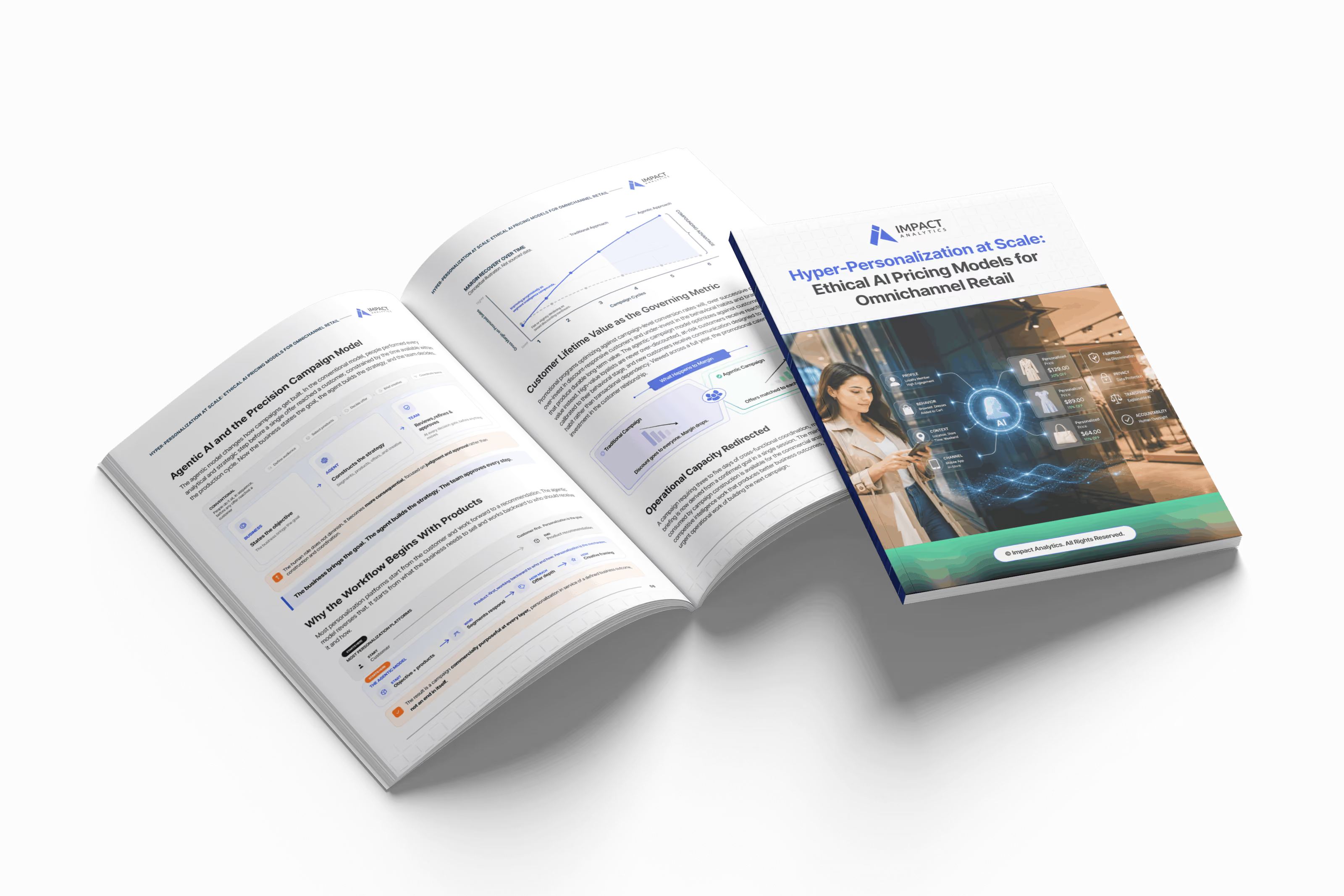
Hyper-Personalization at Scale: Ethical AI Pricing Models for Omnichannel Retail white paper shifts your focus from getting more data because you already have it. What's been missing is the ability to act on it before the campaign window closes.
So Why Hasn't this Been Fixed Yet
Here's the thing nobody likes to say out loud: enterprise retailers aren't short on data. Transaction history going back seasons, behavioral signals across every channel, loyalty data refreshing daily, all of it has been there the entire time.
It is more about coordination with your data. Building a campaign that's actually segmented, actually matched to the right products, calibrated down to the smallest offer that moves each group, takes more cross-functional choreography than most teams can pull off in a normal window. So you standardize an offer for everyone, and the customers who needed the least convincing end up paying even less for your products.
If we talk about omnichannel, it's worse than that. Does the same customer behave the same way in-store as they do on your app? They don't, and the paper is blunt about it. Higher basket sizes in physical retail, faster decisions on mobile, completely different category interest depending on the touchpoint. One promotional structure applied evenly across all of that doesn't miss the opportunity once. It misses a different version of it at every single channel, simultaneously, using data you already had.
What If the Campaign Started with the Product Instead of the Customer
Every personalization platform you've probably evaluated starts the same way: look at the customer, work forward to a recommendation. The workflow here flips that entirely. It starts with what the business actually needs to move, whether that's seasonal stock heading toward clearance or a high-margin line with room to discount, and works backward from there to figure out who gets what and why.
How does that actually work in practice? A team types the campaign goal in plain language, nothing more technical than a sentence. An agent takes that and builds the entire strategy underneath it: segments, product matches, calibrated offers, creative for each group specifically, all inside the margin rules the business already locked in. And at every step, a human has to confirm before the next one runs.
The Five Steps of Campaign Building
- Goal and Context: The plain-language ask gets turned into operating boundaries: category, channel, margin flexibility, guardrails
- Segments: Built fresh against this specific campaign instead of recycling from a static list
- Products: Anchored to what the business actually needs to sell
- Promotions: Each segment matched to the smallest offer that will move it
- Creative and Review: Generated and approved segment by segment before anything reaches a customer
How many of your own campaigns are still running on that "one week of coordination" model?
If you want to see exactly how each of those five steps works, including what the agent surfaces for human review and what it's not allowed to touch, go through the full white paper here.
Who's Actually Accountable When the Agent Sets the Price
If an agent is calibrating discounts, who's answering for it when a regulator or a board member asks how a price got set?
The paper doesn't dodge this. Margin thresholds, discount caps, and exclusion rules get set by a human at the very first step, and the agent has to work inside them at every step after that, automatically. If an offer approaches a threshold, it gets flagged for a human to look at rather than executing on its own. Nothing goes live without someone's name on the approval. And the scope of what the agent is trusted to do on its own only expands once its judgment has actually proven out across real campaigns, not because someone assumed it would work.
That's a genuinely different posture than "let the algorithm decide." It's closer to "let the algorithm propose, and let the track record decide how much rope it earns."
What Are You Optimizing For
Is your promotional program optimized for the campaign or for the customer relationship? Most are optimized for campaign-level conversion, which sounds fine until you notice what it trains over time. You end up over-investing in the customers who were always going to respond to a discount, and under-investing in the ones building actual loyalty to your brand.
The paper argues for a different target entirely: customer lifetime value. Loyalists stop getting discounts they never needed. At-risk customers get reactivation offers sized to where they actually are, not a blanket win-back email. New customers get messaging built to create a habit, not a transaction. Add that up across a year instead of a single campaign, and you're looking at the difference between a promotional calendar that quietly drains margin and one that compounds value every time it runs.
Where Would You Even Start?
Start with whichever channel or category has the cleanest data. Get clear on who owns the guardrails versus who owns final sign-off. And measure three things at the same time instead of one: execution, financial impact, and the actual customer relationship, because measuring only the first two tells you the dashboard looks good, not whether you're building something durable.
If you're sitting on a loyalty program that's been quietly over-discounting your best customers, or a reactivation campaign that moves volume but never the right people, this paper was written with exactly that problem in mind.