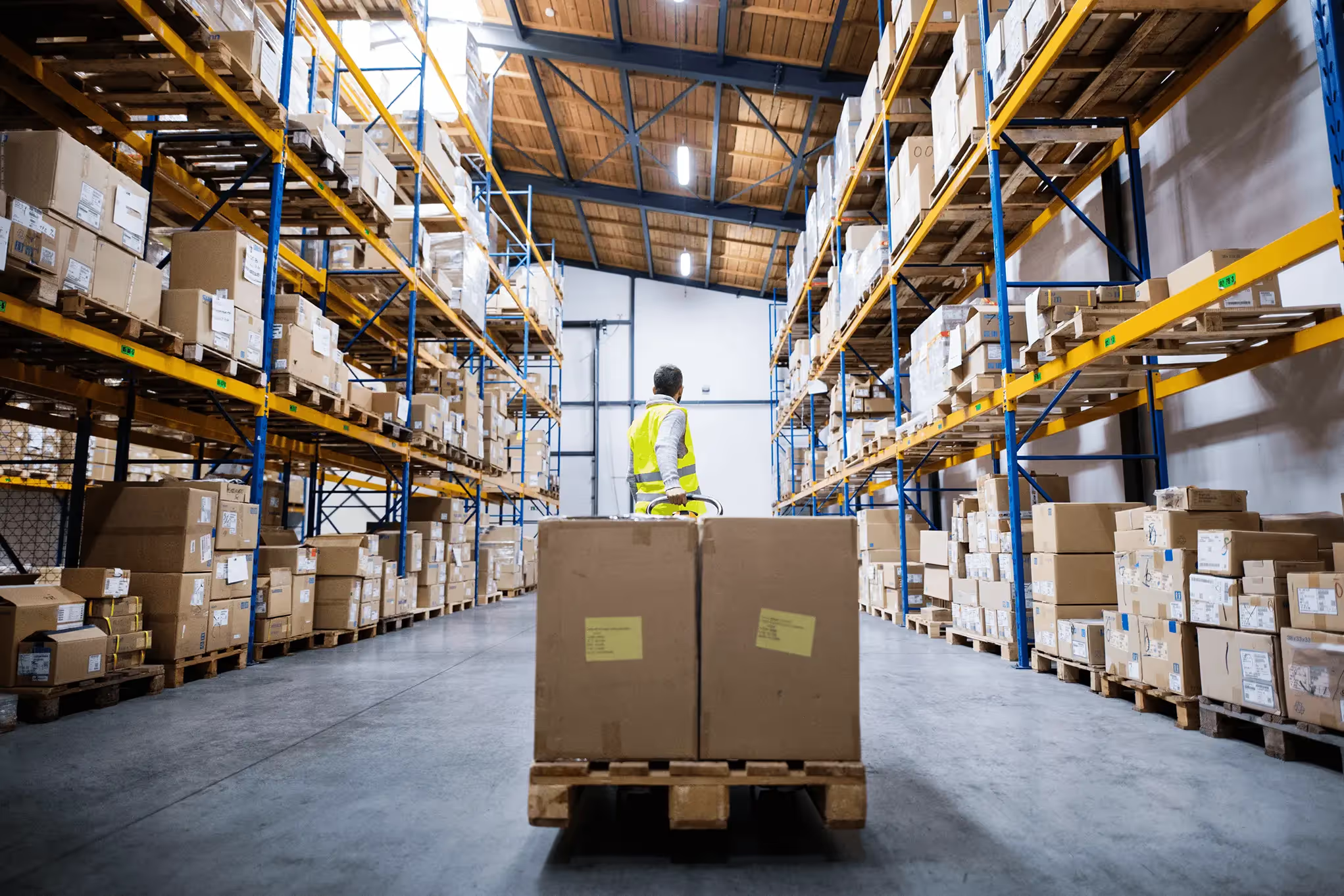






What Are Inventory Carrying Costs?
Inventory carrying cost is the entire stock holding cost. It covers storage, insurance, capital, and risk of loss. This cost directly affects profitability and cash flow.
Carrying costs, also called inventory holding costs, matter for every retailer. Businesses pay these costs for every item held in a warehouse. The meaning of carrying cost is the price of keeping unsold goods.
APQC benchmarking data shows a clear pattern. Carrying costs typically range from 20% to 30% of total inventory value; however, they may vary based on industries. This represents a major operational expense.
Understanding carrying costs is essential for any business. Costs associated with holding inventory add up fast. By tracking these expenses, companies find savings. Freed capital supports growth and new investments.
Components of Inventory Carrying Costs
Inventory carrying cost is made up of four key components, each contributing to the overall cost of holding stock. Breaking these down helps identify where costs build up and where optimization efforts should focus.
Capital Costs
Capital cost reflects the opportunity cost of funds locked in inventory instead of being used elsewhere in the business. Cash locked in stock cannot fund other investments. The cost of capital reflects borrowing or equity costs. This opportunity cost is often the largest component.
Consider a retailer with $1 million in inventory. At a 10% capital rate, the annual cost is $100,000. Lower inventory levels free up cash for other uses.
Storage Costs
Storage cost covers rent, utilities, labor, and equipment. These are direct expenses of warehouse operations. Climate-controlled facilities add further expense.
Inventory storage costs scale with the amount of inventory held. Reducing excess stock lowers warehouse costs. Learn more about inventory cost reduction strategies.
Service Costs
Holding inventory comes with several built-in costs: insurance coverage to guard against potential theft, damage, or loss; applicable taxes that some regions impose on stock on hand; and the administrative work required to manage it all.
Administrative costs cover record-keeping and compliance. These costs grow as inventory levels increase. They form a key part of total inventory carrying costs.
Inventory Risk Costs
Inventory risk cost covers shrinkage, obsolescence, and damage. Inventory shrinkage includes theft and mishandling losses. Obsolescence hits when products lose market value.
Risk costs are hard to predict but can be large. Fashion retailers face seasonal obsolescence risks. Tech companies face rapid product cycle changes. Careful demand planning reduces these costs.
How to Calculate Inventory Carrying Costs
Calculating inventory carrying costs starts with a simple formula. The calculation helps quantify this major cost category. It reveals how much each dollar of stock truly costs.
The Inventory Carrying Cost Formula
Carrying Cost % = (Total Carrying Costs / Total Inventory Value) x 100
This inventory carrying cost formula uses two key inputs. First, sum all cost components: capital, storage, service, and risk. Second, find the average inventory value.
To calculate the total value of inventory, use this method. Add beginning inventory value to ending inventory value. Divide by two for the average. Then multiply by the result of the equation above.
The carrying cost formula works across time horizons, with annual inventory value as the standard benchmark, and it applies consistently across industries. But demand doesn’t stay stable. It shifts weekly, sometimes even daily. At the same time, holding periods vary by product and location, and the risk of markdown is far from uniform. Static formulas average out this variability, which limits their accuracy in real-world conditions. AI-native systems address this gap by continuously adjusting carrying cost in real time, factoring in demand shifts, holding durations, and risk signals, while traditional tools remain fixed on static assumptions.
Carrying Cost Example
Here is a carrying cost example for a mid-size retailer.
- Beginning inventory value: $300,000
- Ending inventory value: $500,000
- Average inventory value: $400,000
Now calculate each cost component for the year.
- Capital cost (8% of $400,000): $32,000
- Storage cost: $15,000
- Service cost (insurance, taxes, admin): $8,000
- Risk cost (shrinkage, obsolescence): $5,000
Total carrying costs equal $60,000 per year.
Carrying cost percentage = ($60,000 / $400,000) x 100 = 15%. This retailer spends $0.15 per dollar of inventory held. This calculation helps benchmark against industry norms.
What Causes High Inventory Carrying Costs?
High inventory carrying costs often stem from poor forecasting. Excess inventory builds when demand estimates miss the mark. Slow inventory turnover increases the time products sit in storage.
Several root causes drive up carrying costs:
- Overordering beyond actual customer demand.
- Lack of inventory visibility across locations.
- Seasonal misalignment in stock planning.
- Manual processes that increase errors.
Without automated systems, stock levels become unbalanced. Some locations hold too much, while others run short. Both situations raise total inventory carrying costs.
How to Reduce Inventory Carrying Costs
Reducing inventory carrying costs requires a structured approach. Businesses that lower inventory levels while keeping products available succeed. Several reliable methods exist for keeping inventory carrying costs in check.
Improve Demand Forecasting
Accurate forecasting is the foundation for reducing excess stock. Better forecasts help businesses order the right quantities. This directly reduces carrying costs for slow-moving items.
Advanced systems analyze sales history and seasonal patterns. AI-powered forecasting detects demand signals faster. Explore how inventory analysis supports better decisions.
Optimize Reorder Points and Safety Stock
Reorder points control when new stock arrives. Safety stock buffers protect against demand spikes. Setting these levels too high creates excess inventory.
Optimize inventory with dynamic safety stock or service levels. Orchestrate your supply chain movement with a single forecast for seasonal allocation, store replenishment, and warehouse replenishment. Leverage DC-to-DC balancing and store-to-store transfers, where cost-effective, to improve turns with the inventory already in-network, rather than placing net new orders.
Optimize Inventory with AI-Native Inventory Management Software
An inventory management system automates key decisions. It handles replenishment, allocation, and tracking. Inventory planning software eliminates manual errors.
Managing inventory with software provides real-time visibility. It prevents duplicate orders across locations. The return on investment often exceeds the cost within months.