





Penetration pricing is one of the boldest launch tactics in retail. Brands set a low price for a product or service to pull in new customers fast. It helps them capture market share before competition can respond. Even though the tactic looks simple, the decision behind it is strategic: to build a stronger customer base.
This guide to penetration pricing breaks down the full picture. You will see what the model means and how it works in practice. The article covers real examples, the pros and cons, and when to use it. It also shows where it fits among other pricing strategies in the playbook.
What Is Penetration Pricing
Penetration pricing is a strategy where a brand launches at a low price. The goal is to win customers, gain market share, and build a customer base. It is also called a price penetration strategy or market penetration pricing.
Penetration pricing is often used when a company enters a crowded market. It works best where buyers are price sensitive and willing to switch brands. The brand sets a low price for a product that buyers already know.
The model means trading early margin for early scale. The brand pulls in trial buyers, then works to build trust and habit. Some firms run this as a customer acquisition strategy with a fixed end date.
Penetration pricing isn't a long-term pricing model in most cases. It is often a short-term play that ends with a price increase. The penetration pricing approach is built for speed, not steady margin. This pricing method generally sits at the heart of a launch plan or market entry, but every brand has its own strategy.
How Penetration Pricing Works
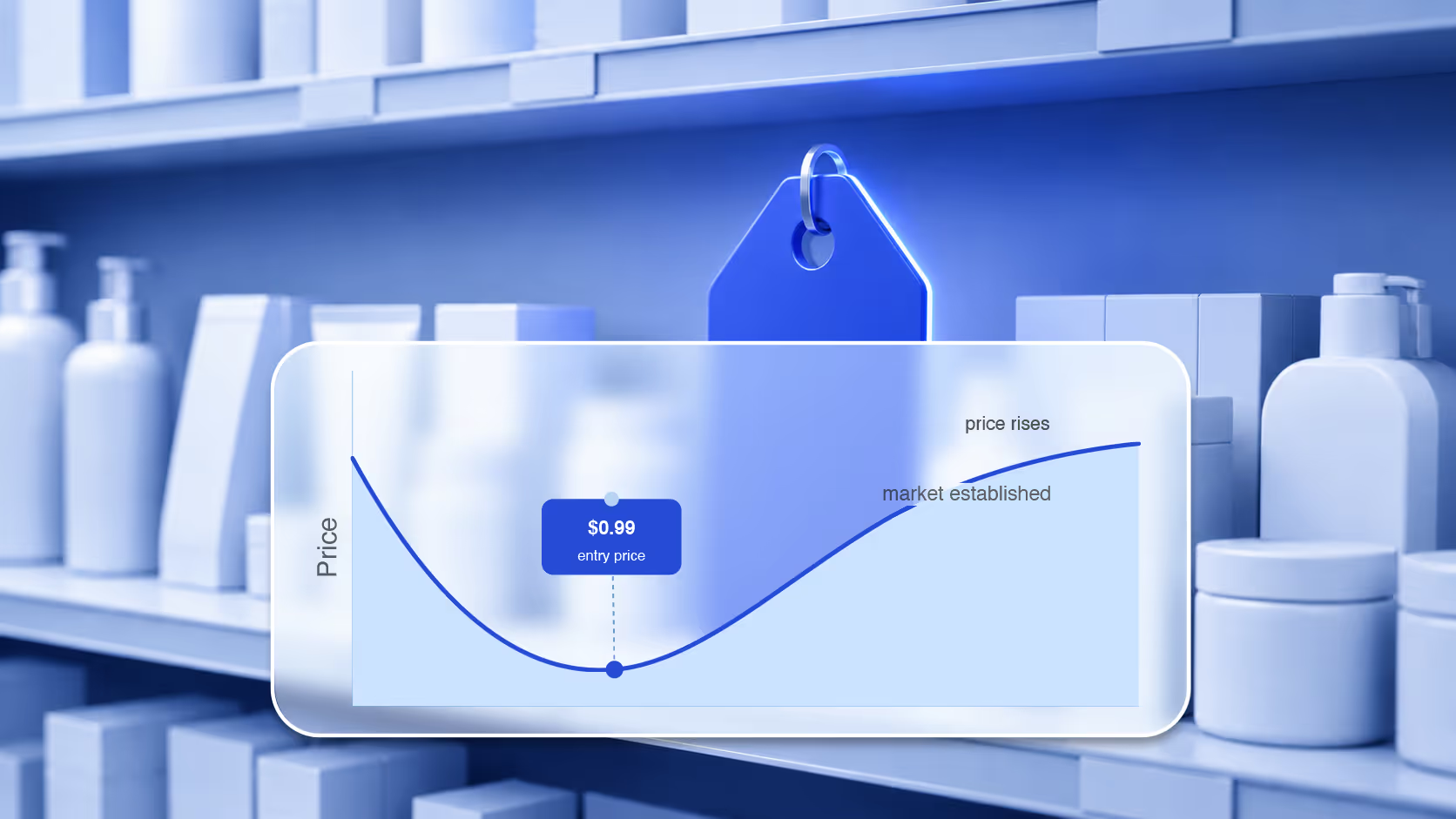
Penetration pricing works in three stages. A brand sets a low price below the market rate. It attracts customers, builds a base, and gains market share fast. Then the brand may raise prices or hold the rate to scale further. The model trades short-term profit margin for long-term position.
Stage 1: Set the Launch Price
Penetration pricing starts with research. The brand studies what buyers are willing to pay and what competitors charge. It then sets a competitive price below most options on the shelf. Strong marketing pushes the new product or service into view. AI-native pricing platforms speed up this research stage. They analyze elasticity, competitor moves, and demand signals at scale. AI can identify the price floor that drives trial without crushing margin.
Stage 2: Drive Volume and Trial
Volume drives the early payoff. Selling more units at a lower price can offset the thin margin per sale. This pricing strategy works when the product is easy to scale.
Stage 3: Choose the Next Move
After launch, they could either hold the rate to keep growth and lock out rivals or raise the price once the customer base feels loyal. The second path is the classic penetration pricing strategy to recover margin quickly.
AI helps brands time the next move. It tracks repeat buying, churn risk, and price sensitivity in real time. These signals show when to raise prices and when to hold the rate.
Implementation needs care. Brands that implement penetration pricing without a margin plan often lose money. Use this strategy with clear rules on cost, volume, and exit price. Using this pricing model well needs strict cost controls and exit timing.
Another decision to be made in implementation is whether to have a launch price much lower than market or to launch at a price closer to market but aggressively run promotions on the product during the initial launch phase. The advantage of the latter approach is that it avoids the potential risk of adverse reaction from customers for the price increase that eventually needs to happen in the former approach. The implementation approach would need to vary depending on whether the product responds better to an EDLP or Hi-Lo strategy, and AI technologies can help with that decision.
Penetration Pricing vs. Price Skimming and Other Pricing Strategies
Two common pricing strategies sit at opposite ends of the launch spectrum. The first starts with a low price to win volume and market share. Price skimming starts with a high price to capture early adopters of a particular segment, and a margin.
Penetration Pricing vs. Price Skimming
The two are sometimes confused with price skimming, but the goals differ. Use a penetration pricing strategy when buyers switch brands easily. Use the skimming model when the product is novel, and buyers want it first. Penetration pricing vs. skimming is a question of speed versus margin.
How it Differs From Predatory Pricing
Predatory pricing is different. It sets prices below cost to push rivals out of the market. That tactic is illegal in many regions, including the United States. A low-price launch stays legal because it does not aim to harm competition.
How it Differs From Freemium and Premium Pricing
Freemium pricing gives a base version free, then sells premium pricing tiers. A low-price launch keeps a price on the product but sets it below market. It is similar to loss leader pricing in using low entry prices to drive traffic.
Other pricing strategies, like dynamic pricing, fit mature markets.
Pricing strategy examples like these show the full lifecycle of a launch.
Penetration Pricing Examples in Retail
Penetration pricing examples appear across streaming, grocery, and fast food. Each brand launches with a low price, builds buzz, and then plans for growth. These cases show how a low-price launch can reshape a category fast.
Streaming and Subscription Services
Disney+ launched in late 2019 at $6.99 per month in the United States. Netflix charged $12.99 at the time. The low launch price helped Disney+ sign over 10 million users on day one. That early win is a clear example of penetration pricing in action.
Grocery and Warehouse Retail
Aldi and Lidl entered the U.S. grocery market with low private-label prices. Both used aggressive pricing to win loyal shoppers from larger chains. Costco prices fuel below most stations to pull traffic into its warehouses.
Tech and SaaS Launches
Many software firms sell a new product at a low entry rate to seed adoption. They later lift prices on advanced tiers once the customer base grows. This penetration pricing model fits markets with low switching costs.
Fast Food and QSR
Quick-service brands often run market penetration pricing in share battles. Limited-time low prices drive store visits and trial of new menu items. Value menus sit at the heart of this approach.
Advantages of Penetration Pricing
The benefits of penetration pricing fall into four main areas. It helps brands attract customers, gain market share, and build loyalty. Each benefit can give a long-term edge if the launch plays out well. Learn how penetration pricing attracts buyers ahead of every other tactic.
Faster Customer Acquisition
Penetration pricing helps brands sign up new customers faster than premium pricing. A low entry price lowers the trial barrier. More buyers test the product, and many stay if the quality holds. A new customer who joins during launch often becomes a long-term repeat buyer. Compared with other pricing strategies, this model drives faster trial volume.
Bigger Market Share
Brands using this strategy effectively can take share from slower rivals. Rapid trial builds awareness and pulls demand from incumbent brands. Once share lands, it is harder for rivals to claw back.
Stronger Customer Loyalty
A loyal customer base builds when buyers feel they got real value early. That loyalty pays off when the brand later lifts prices on add-ons or tiers. Repeat buying also lowers the cost of future marketing and acquisition.
Barriers for Rivals
A low launch price makes it hard for rivals to enter the market with a higher tag. This is one of the strongest reasons to use penetration pricing in new launches. Penetration pricing can help build switching costs that rivals struggle to break.
Disadvantages of Penetration Pricing
The cons of penetration pricing center on margin, brand image, and price recovery. Brands that lean on low prices too long can damage profit and reset expectations. The strategy carries real penetration pricing risks if the plan is not tight. Smart teams weigh the pros and cons of penetration before launch day.
Squeezed Margins
Selling below market rate cuts profit margin per unit. Volume must be very high to make up the difference. If demand falls short, the company loses money fast.
Hard Price Increase Later
Customers who are used to a low launch price may reject any price increase. Some will switch to other brands the moment prices rise. This is one reason a low-price launch isn't right for every product. Depending on the type of product, a careful decision has to be made on whether to launch with a low price and hike it up later or to launch with a price closer to market and drive market share at launch through aggressive promotions. AI technologies can help make that decision by estimating price elasticity from similar products and product launches in history.
Brand Perception Risk
A long stretch of low prices can shape how buyers see the brand. Buyers used to higher tiers may avoid a label they see as cheap. That perception is hard to undo, even after prices recover.
Race to the Bottom
Rivals may answer with their own price cuts, and a price war begins. This pricing is an aggressive strategy that can hurt every player in the market. Penetration pricing is an aggressive launch tactic, not a steady-state model.
Cash Strain
Most brands need cash to fund the early loss period. Smaller players often run out of runway before the customer base scales. Always weigh the trade-offs before betting the launch on a low-price model.
When to Use a Penetration Pricing Strategy
A penetration pricing strategy works best when three factors line up. Buyers are price sensitive. The market is crowded. The product is easy to scale. This strategy works best when growth and switching costs both favor the brand. Without these factors, this approach can backfire fast.
Launching a New Product
Penetration pricing is a great way to launch when introducing a new product. The low entry price builds early sales and word-of-mouth before rivals react. It also helps when buyers face many similar products or services on the shelf.
Markets with High Price Sensitivity
Buyers respond fast to price in groceries, streaming, and household goods. Strong price elasticity matters here, since small price moves shift demand a lot.
Across many products or services with thin margins, this approach can win share. Brands in commodity categories often default to a low-price stance from launch. Daily essentials, snacks, and basic apparel all show high response to low rates. Knowing the price elasticity of each item helps the team set the right floor.
AI tools surface which items show the elasticity that fits a low-launch play. They scan SKU-level demand patterns to flag the strongest candidates. AI can also map which markets and segments respond fastest to a low entry price.
As a Customer Acquisition Strategy
Penetration pricing is an acquisition strategy for fast user growth. Pricing is an acquisition strategy that pulls in trial users at a low cost. Penetration pricing enables a company to reach scale before rivals catch up. A long-term strategy is more likely to succeed when a trial converts to repeat use.
As a Market Entry Play
A market penetration strategy fits when a brand enters a new region or category. Lower local prices can break through brand habits and shelf preference. Many retailers run a market penetration pricing strategy in new regions. Use a low-launch approach when speed matters more than first-year margin.
As Part of a Marketing Strategy
Penetration pricing is a strategic move within a wider marketing strategy. Pair it with messaging that signals real value, not just a cheap tag. The value of the product still matters, even when the price is low.
Conclusion
Penetration pricing is one of the boldest pricing strategies in retail. It can help a brand win share fast and build trust with new buyers. It can also drain margin and lock the brand into a low-price image. Use penetration pricing when scale and price sensitivity favor the move.
These pricing strategies may apply to many products or services in the lifecycle. The key is matching the launch price to the goal and the buyer's mindset. AI takes the guesswork out of every stage, from setting the floor to timing the exit.