





Why Retailers Are Moving to AI Pricing
Pricing in 2026 is too fast, too granular, and too competitive for spreadsheets and rule-based pricing alone. AI pricing tools and AI systems let buyers optimize prices by modeling demand at the SKU store level and using dynamic pricing to adjust prices, helping retailers maximize margin in the real-world retail landscape. Artificial intelligence separates brands and retailers winning the next cycle from those defending it. This guide covers the seven capability dimensions to evaluate in 2026.
What Is AI Pricing Software?
AI pricing uses machine learning algorithms to set base price, dynamic pricing, and markdown decisions across the retail catalog at SKU store level granularity. Unlike rule-based pricing, which applies fixed margin formulas tied to vendor cost, AI-powered pricing models consider price sensitivity and demand. The system adapts to real-time market conditions, competitor actions, inventory levels, and shifting demand through advanced algorithms that learn from every transaction.
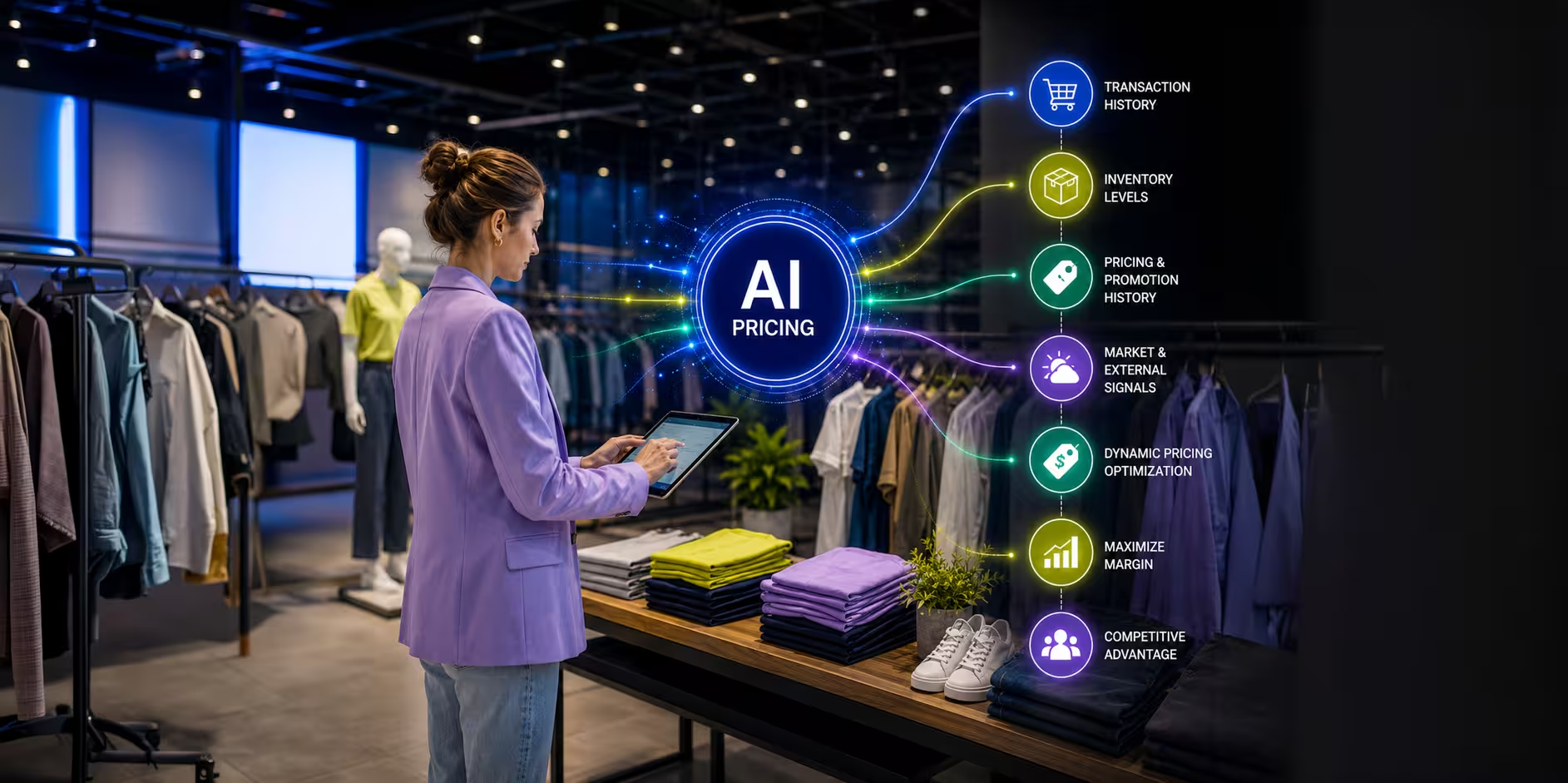
Modern AI pricing relies on four data inputs: transactional history, current stock position, historical data on past prices and promotion outcomes, and exogenous signals such as weather and competitor moves. Strong systems combine internal and external data through automated data collection, then run analytics across multiple variables to produce strategic price recommendations or automated price changes across multiple channels.
The shift from static pricing and traditional pricing rule sets to AI-powered dynamic pricing protects competitiveness and profitability in a fast-paced, competitive landscape shaped by e-commerce and price-sensitive shoppers. Retailers that implement dynamic pricing this way gain a durable edge over competitor brands stuck on rule-based pricing.
What Enterprise Retailers Should Evaluate in AI Pricing
Generative AI applied to retail could unlock 240 to 390 billion dollars in value, equivalent to a 1.2 to 1.9 percentage point margin increase, according to McKinsey research on scaling gen AI in retail. Capturing that value depends on choosing the right platform. The framework below helps procurement teams evaluate price optimization platforms against criteria that matter.
Retail-Native ML Architecture
Whether the platform was built on ML from inception or retrofitted later shapes everything downstream. Retail-native systems handle SKU store-level granularity and rapid retraining by default. The strongest leverage advanced algorithms with weather and external signals, refresh models weekly, and run agentic loops that adjust prices in near-real-time for high-velocity SKUs, supporting true dynamic pricing rather than batch updates.
Pricing Decision Scope
Strong AI pricing unifies base price, promotions, and markdown as one integrated lifecycle. Pricing decisions interact: promo cannibalization and markdown timing are intertwined with base price behavior. A unified platform shares elasticity, scenario planning, and KVI/KVC logic across all three and supports multi-objective optimization for revenue, margin, and price perception.
Granularity
Granularity is the most predictive feature of margin outcomes in modern AI pricing. Strong platforms model pricing impact at the SKU store week level, and down to the day level for promotions and markdowns. Weaker systems aggregate to category, region, or month, which masks local demand differences. Two stores in the same metro can have entirely different elasticity for the same SKU. The SKU store week refreshed weekly is the enterprise benchmark any serious pricing program should target.
Integration With Inventory And Forecasting
Pricing decisions made in isolation produce markdown waste. A pricing engine that does not see near-real-time stock data will mark down SKUs that should hold price because supply is constrained, and miss markdown windows on SKUs that need to clear. Strong platforms read stock position and use predictive models to forecast demand as live inputs through native integration with inventory and forecasting modules. Near-real-time API integration is becoming common for AI-driven pricing, alongside dynamic competitor price monitoring.
Vertical and KVI Strength
Vertical fit shapes pricing accuracy. Grocery platforms struggle with fashion seasonality. Fashion platforms struggle with grocery promo cannibalization. Off-price requires different markdown sequencing than full-price retail. Ask for documented case studies in the retailer's vertical and native KVI/KVC classification that tie pricing decisions to traffic drivers and basket builders.
Time to Value
Time to value separates platforms that scale from platforms that stall. Retail-native platforms produce pricing outcomes through pre-built rule libraries and automated data ingestion. Archaic tools require months or years of foundation work before any pilot launches.
Governance And Override Controls
Enterprise retailers face rising algorithmic accountability standards. Strong platforms ship an exception-based interface with rule libraries covering brand, size value, cross-zone, competitive, and gross margin rules. Category managers retain override authority on flagged decisions. Alerts surface contextual recommendations outside policy guardrails. Audit trails capture every recommendation and override.
How to Choose an AI Pricing Platform
Six criteria separate enterprise-grade vendors from the rest.
- Retail-native ML architecture, designed for retail data and weather signals.
- Unified base price, promotion, and markdown in one platform, with native KVI/KVC analysis to shape pricing strategies for high-impact items.
- Integration with stock data and demand forecasting, not isolated pricing.
- Governance and override controls with deep rule libraries and exception-based workflows.
- SOC 2 Type II compliance and data residency posture.
For most enterprise retailers, vertical fit is the deciding factor in the search for the best pricing outcomes. The goal is to use AI to capture the profit the retailer is leaving on the table. Modern AI pricing helps optimize the full lifecycle from base price through markdown and helps refine the pricing strategies that move the needle.
Conclusion
The retailers winning in 2026 are not the ones with the most AI buzzwords on their roadmap. They are the ones who picked a retail-native platform that unifies base price, promotion, and markdown, runs at the SKU-store-week granularity, and integrates with stock and forecasting. Use the framework to evaluate platforms, prioritize vertical fit, and run a single-category pilot before scaling.